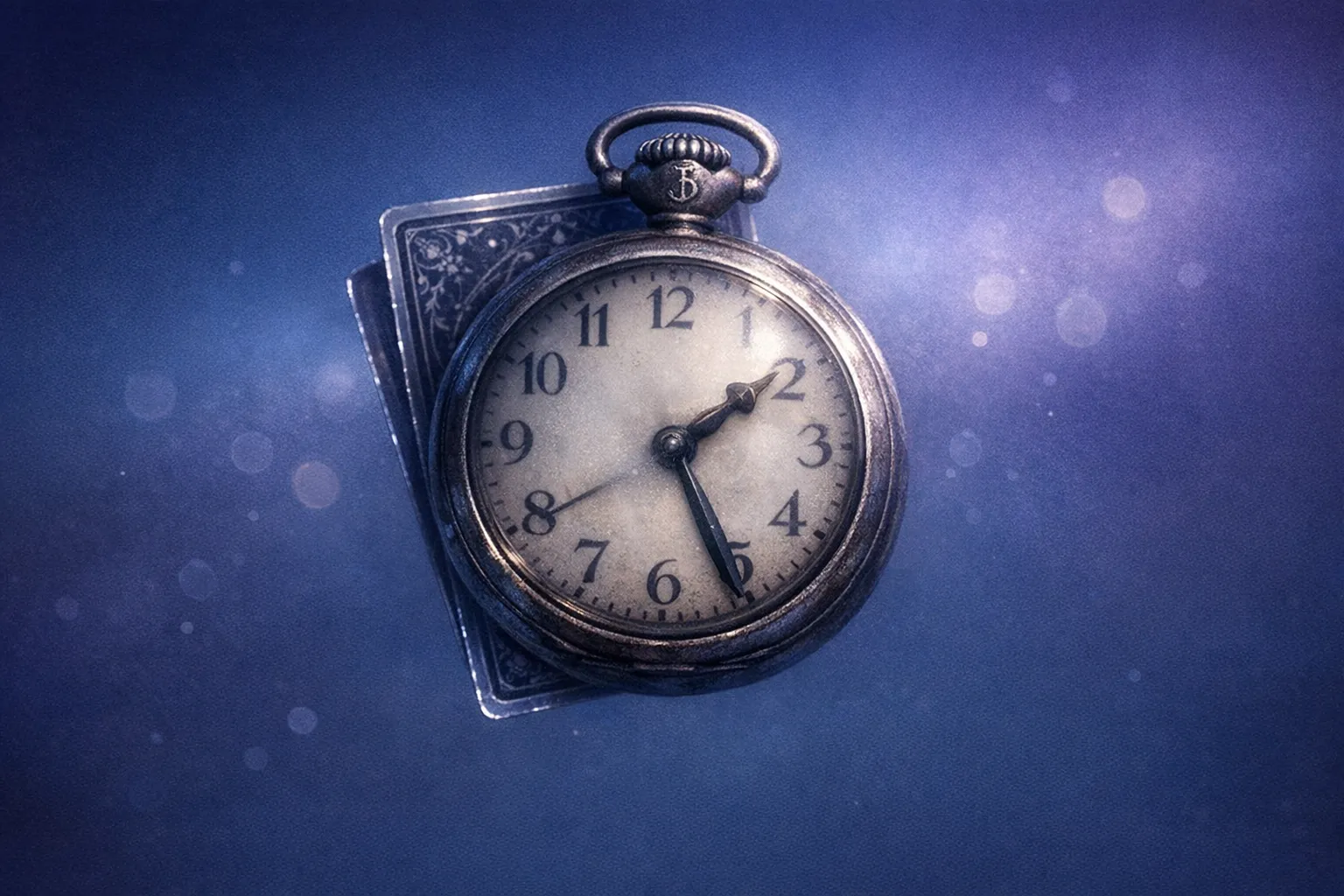
Jupiter’s Hour: Timing the Magic
Confession: I used to think “planetary hours” sounded like a steampunk clockmaker’s fan club – copper gears, little brass moons, everyone arguing about minute hands. Then Jupiter kept winking at me in the oddest ways. The coffee shop line would part at 2:28 PM. A text with good news would land when I’d glanced at a chart and muttered, “Ah, Jupiter’s hour.” It felt less like coincidence and more like a rehearsal cue from the cosmic orchestra, a warm brass note that arrives right on time.
Jupiter’s hour isn’t about fate as a railroad schedule. It’s a frame, a lens, a bell that rings the hall of your attention. In astrology’s old pocket watch, the day is carved into twelve daylight hours and twelve nightly ones, each claimed by a “planet” – Sun, Moon, Mars, Mercury, Jupiter, Venus, Saturn. The hours change length with the seasons, which gives them a breathing, living quality: longer in summer, shorter in winter. Jupiter’s hour is the moment of benefic wideness – expansion, optimism, that generous hush before something good clicks into place.
Standing at the crossroads of a city at precisely 2:28 PM, I felt it: a brush across the spine, like a friend leaning close to whisper something I already knew but had forgotten. Was that Jupiter’s hour? Maybe. Or maybe it was my own future self, palms cupped around my ear, speaking in the language of timing. Planetary hours aren’t a conspiracy of clocks; they’re a conversation with thresholds. Some doors feel heavier at Mars o’clock. Others glide open on Jupiter’s watch.
What I’ve learned is this: timing doesn’t replace intuition. It coaxes it, giving your inner knowing a spotlight and a tempo. If your life feels like an orchestra tuning up – clarinets sighing, strings plucking uncertainly – Jupiter’s hour is the soft strike of the conductor’s baton. You’re still the one who plays. But that nudge says, “Listen, now.” Not because the universe demands obedience, but because your attention is the sanctuary where symbols decide to land.
Planetary Hours: The Rhythm of the Cosmos
Let’s demystify the mechanism without losing the magic. Planetary hours are a medieval timekeeping tradition that assigns each hour to a planet in a repeating order, starting at sunrise with the ruler of the day. Thursday belongs to Jupiter, so the first hour after Thursday’s sunrise is a Jupiter hour. After that, the planetary rulers rotate in a fixed sequence. Sunrise and sunset reset the deck, dealing twelve daylight and twelve nighttime hours – unequal in duration except at the equinoxes. It’s astronomy whispered through poetry.
You don’t need parchment, an astrolabe, or monk’s robes. A simple planetary-hour app or a quick online calculator will tell you which hour belongs to whom. If you prefer the tactile route, you can do the math: divide the time from sunrise to sunset into twelve equal parts for daytime hours, and the time from sunset to next sunrise into twelve for night. The result is a personal tempo for your sky that day, local to your longitude, like a private metronome.
Jupiter’s hours, scattered through the day and night, feel like soft expansions. They don’t promise jackpots. They promise elbow room. Calls return. Ideas inflate just enough to become shareable. We remember that generosity isn’t a luxury – it’s a way of circulating faith. If Saturn is the timpani reminding us of boundaries and Mars the trumpet of initiative, Jupiter is the section where the cellos widen the corridor and the horns invite applause.
Does this require belief? Not exactly. It requires curiosity – the willingness to track a day’s texture and notice what clumps together. If you mark the hours for a week, you may catch patterns that feel like the cosmos clearing its throat before you speak. Or you may simply grow more attentive, which is a magic all its own. Think of planetary hours as page numbers in an unwritten diary. You’re not predicting so much as indexing your moments, discovering that certain pages tend to hold the brighter ink.
Lucky Timing for Tarot: A Brief Experiment
Imagine you blend Jupiter’s timing with a tarot deck – the pictorial language of your subconscious meeting the expansive hush of benefic timing. Tarot, for anyone new to it, is a set of 78 cards rich with archetypes: travelers, towers, stars, lovers, suns. The cards aren’t fortune-tellers with clipboards. They’re mirrors with costumes, reflecting your inner stage and giving your intuition a script to improvise with.
Here’s a simple experiment: for one week, pull a single tarot card during a Jupiter hour. Note the day, the card, and any events or feelings that ripple out in the next few hours. You’re not looking for lightning bolts. You’re listening for brass – small crescendos of opportunity, kind comments, or a neatly resolved errand. Jupiter’s gift is often permission, the green light you didn’t know you were waiting for.
When I tried this, I noticed how The Star greeted me on a night Jupiter hour when I felt dusty and drained; I took it as an invitation to refill my well, literally and metaphorically. I went for water and silence. In the morning, a long-stalled idea suddenly arranged itself like a choir finding harmony. Coincidence? Maybe. But the card gave my quiet a shape. Another time, the Page of Pentacles popped during a Thursday afternoon Jupiter hour. I treated it as a “draft the first paragraph” nudge, not a “finish the novel” mandate. The paragraph grew legs.
Let Jupiter’s hours be when you choose curiosity over pressure. If you pull The Lovers, maybe it’s about choosing your values in a lunch menu or a life pivot; Jupiter says, expand the kindness and watch the choice clarify. If you pull The Chariot, you don’t need to conquer a mountain. Just set a direction and take one deliberate step. Jupiter’s air is forgiving. It carries sound. Speak your intention, even if it’s whispered. The timing won’t do the work for you – think of it as good acoustics for your inner voice.
Crossroads Conversations: Composite Voices From the Hour
I started asking friends and clients to try the experiment, and their stories began knotting into a small constellation. None of them swore allegiance to timing as law. But they noticed the hour’s texture the way you notice a different room’s lighting.
-
A musician I know scheduled her drafting sessions during Jupiter hours for a month. “It’s like my ideas felt welcome,” she said. “Not smarter, just less shy.” Her Jupiter-hour pull was often the Three of Wands – long view, small ships on the horizon. She found herself emailing collaborators she’d been quietly admiring for years. “I didn’t get a record deal. I got a yes to a coffee, and that yes turned into a chorus on a track.”
-
A community organizer pulled the Six of Pentacles on a Thursday evening Jupiter hour before a fundraising call. “I asked myself, ‘Where does generosity already live here?’” She opened the conversation by naming what the donors had already built together. “We raised less than the goal, but more than the usual,” she said, laughing. “It felt like Jupiter saying, ‘Start with thank you.’”
-
An engineer used Jupiter hours to pitch micro-ideas at work. His card was often the Knight of Swords – momentum, but targeted. “I stopped waiting for perfect big pitches. I brought a sketch at 2-something PM on Thursdays. Managers were inexplicably in good moods.” He shrugged. “Correlation? I’ll take it.”
-
A florist who had sworn off timing altogether pulled the Nine of Cups – a cozy satisfaction – during a rainy-night Jupiter hour. “I brewed tea and redid my shop window,” she said. “Next morning, a couple honeymooning from out of town bought the display bouquet and a half-dozen extras. They’d seen the reflection in the puddle.”
You’ll notice what’s missing from these tales: fireworks. Jupiter can do fireworks, but often it hands you a better room and a small microphone. Timing becomes a form of hospitality for the soul: you arrive, someone opens the door, and you remember your own name. The tarot cards lend you metaphors that travel well. The hour lends you a stage manager who whispers, “You’re on in five. You’ve got this.” Together, they make your future-self’s messages legible, like a note slid across the table in tidy ink.
If you try it, give yourself room to be wrong and amused. Some hours will be utterly ordinary. But even ordinariness, noticed, tends to loosen its collar. The playlist of a day feels different when you become the person who listens for the brass.
Clockwork Kisses: A Mini-Ritual for Future Postcards
Here’s a tiny ritual, more theater than theorem, designed to keep the hour playful. Use it lightly, like perfume you catch when you turn your head.
-
Find the hour. On a Thursday, locate one Jupiter hour in daylight and one at night. Set a gentle alarm – a bell, not a siren.
-
Prepare the deck. Before the hour begins, shuffle your tarot deck and hold it like a letter you’re about to open. If you don’t have a deck, use a favorite image from a book or a symbol you love – a feather, a key, a coin.
-
Name the corridor. Quietly name what expansion would mean for you today. Not a lifetime manifesto – just a room you’d like to enter. “I want clearer words,” or “I want a friendly nudge toward savings,” or “I want ease in my body.”
-
Draw and listen. At the hour’s start, draw one card. Don’t rush to interpret. Let your first impression surface: a color, a gesture, a mood. Imagine your future self five weeks from now squeezing your shoulder and saying one sentence. Write that sentence down exactly as it arrives, no polishing.
-
Make a small promise. Choose one action under 10 minutes inspired by the card. If you pull Temperance, drink water and send the email you’ve been tempering. If it’s The Hermit, set a 7-minute timer to tidy one corner of your thoughts. Jupiter likes small doors that open into long hallways.
-
Close with gratitude. When the hour ends, thank the moment for existing, even if nothing grand happened. Gratitude, in this practice, is not moral homework – it’s how you keep the corridor lit.
Over a month, put your sentences in a jar. On a quiet Sunday, read them aloud. Notice how often the words sound like clockwork kisses from your future self – precise, affectionate, a little surprising. This is the tone of Jupiter at its best: kind expansion rather than loud luck. If you crave deeper guidance, schedule a conversation that holds the same spirit, whether that’s an intuitive chat with a trusted friend or a gentle psychic reading. The important thing isn’t authority; it’s reception.
In the end, timing is an art of welcome. Jupiter’s hour doesn’t force your life open; it invites the latch to loosen. Tarot doesn’t declare; it suggests, sketches, hums. Together they make a chamber of echoes where your wiser voice returns from just-ahead-of-now, tapping the frame to get your attention. When that 2:28 PM breeze lifts a hair at the nape of your neck, maybe that’s Jupiter, yes – but maybe it’s also you, waving from the near future with a grin, saying: “Over here. This way. There’s more room than you think.”

