Ascending into Inner Realms
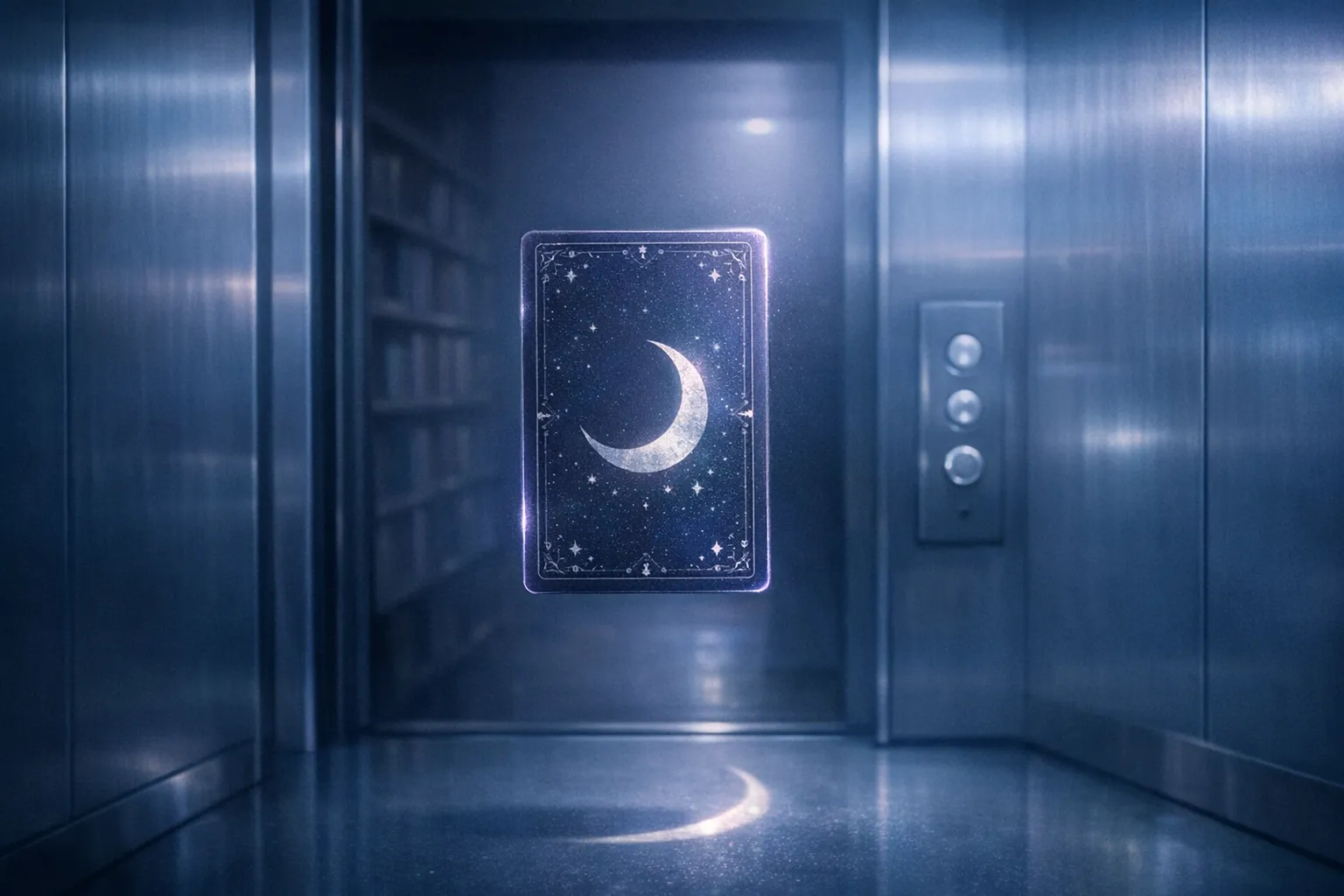
The elevator doors sigh open like a page turned softly in a well-loved book. You step inside, and the world hushes to a velvet murmur: a chime, a breath, the whisper of cable and counterweight. Between the first and second floors, time becomes a slice of moonlight – enough to notice the wish that’s been knocking gently, too considerate to interrupt your daily sentences. It doesn’t shout; it hums. You feel it in your ribcage, the way the tide feels the moon pull – small at first, then insistent, rhythmic, inevitable.
In this pocket of ascent, everything simplifies. You’re not at the desk, not in the stacks, not yet where you’re headed. You are rising. The buttons glow like tiny phases of the moon: basement a new moon, mid-floors a waxing curve, top floor a bright spill of possibility. The elevator is plain, practical – even a little scuffed – and that’s perfect. Magic loves the ordinary. It loves a floor guide with smudged fingerprints. It loves the soft shuffle of someone outside deciding whether to call the lift. It loves the feel of you deciding, right here, right now, to listen.
Imagine the card tucked into your pocket, or your phone holding a single card app, or a tiny deck nestled next to a library receipt. You press the button and feel the friendly tug as the car begins to move. The wish is shy – maybe it’s about learning a language you keep apologizing for not knowing, or about writing pages you claim you’re too busy to write, or about daring to ask for the job, the class, the collaboration. Shy wishes don’t vanish; they wait. They prefer soft light, like seedlings behind a curtain. The elevator provides just that: moving moonlight, a rising hush.
And you – the tender interpreter – become the shoreline. Whatever card lands in your palm will be a wave pressed into a single shell. Not a commandment, not a verdict, just a pattern you can cradle. Tarot works like weather: it mirrors moods already in the air. As the elevator breathes and climbs, you poise yourself between floors, permission in hand. The bell above the doors is your lighthouse. The next ding will come. But for one beat, you listen to the surf inside your chest.
The Magic of the Elevator Pause
If we were to give this little practice a name, I’d call it the Library Elevator Pull: one card for the wish that can’t quite meet the librarian’s eyes. There’s a gentle audacity to it. An elevator ride tends to last under a minute – what could possibly happen in that span? Quite a bit, as it turns out. The mundane mechanics – weight, pulley, counterbalance – do the heavy lifting, while your attention floats loose like a kite. This is the pause that gathers you up.
Tarot, in its friendliest form, is a pocket mirror. It reflects your posture toward the thing you want, smudges and all. A single card is perfect here because it doesn’t demand a thesis; it asks a single, lovingly nosy question. What’s the texture of this wish today? If you draw the Page of Cups, for instance, the wish is wearing rain boots and splashing in puddles – a nudge to play with it, to write the clumsy draft, to try saying it out loud in the kindest room you know. If it’s the Hermit, your wish wants a cubby with a lamp and a closed door, not applause. If it’s the Eight of Pentacles, you’re invited to practice in plain sight – page by page, floor by floor.
There’s a superstition that tarot requires ritual grandeur – salted corners, silver bowls, a candle that refuses to flicker. Those can be lovely. But tarot is also a giddy accomplice in passageways and pauses. When you slip a card from a deck between floors, you’re noticing the smallest hinge in the day and letting it swing. That notice is the magic. The card becomes a conversation-started-now. You anchor the question in your body – what do I actually want? – and let the image answer in a dialect your intuition understands: a rooftop cat, a burst cup, a patient figure with a lantern.
If the card seems thorny – say, the Five of Pentacles or the Tower – remember that the elevator still rises. These cards don’t punish; they flag where your wish feels pinched or shaky. The Tower might suggest your wish needs a new scaffolding, not more paint. The Five might be that ache of “I’m outside looking in,” urging you to step into the warm room, to ask for help, or to redefine who holds the key. Even reversed cards – when an image appears upside down – are less doom than stage direction: softer, delayed, internalized. The elevator’s pause holds it all, free of judgment. You’re not forced to solve your life between floors. You’re only asked to recognize the tide.
Here’s a simple way to meet the pause:
- Before you step in, silently name the wish once. No more, no less.
- As the doors close, exhale. Let the car lift you.
- Draw or tap for one card. Glance; don’t stare.
- Ask: what’s the next teaspoon of movement this image suggests?
- Pocket the thought. When the doors open, do just that teaspoon’s worth.
Teaspoons make oceans. One stepped sentence becomes a paragraph; a paragraph becomes a project; a project becomes your life, rearranged to better suit your breathing. You don’t need a prophecy. The small current is enough.
Crescents, Cards, and Quiet Dreams
Now, let’s let the moon in. The waxing crescent – those first bright slices after new moon – has a way of catching on our edges and pulling gently forward. If you think of the new moon as the hush in a dark theater, the waxing crescent is the first line of dialogue, delicate but confident. In practical terms, a waxing crescent is a good time for intention that prefers a soft entrance: shy wishes, private hopes, the personal promises you’re still testing for size. Aligning your elevator pull with that sliver of moonlight turns the ride into a tide.
What does that look like in the wild? Picture the anchor example: the doors close, and you press for the top floor. Your hand finds the deck (or the app), and you draw the Two of Wands – a figure holding a globe, looking out from a high ledge. You feel the small ache of a wish you’ve minimized: teach a workshop. Not someday; soon. The card says, “Plan out loud.” Top floor opens. You don’t launch a world tour; you simply ask the reference desk about reserving a small room next month. Teaspoon. Tide.
Another day, mid-waxing crescent, you get the Queen of Pentacles. Yours is a wish to knit pleasure and practicality, to take your creativity off the top shelf and put it in the basket you carry every day. The Queen smiles: make it cozy and countable. So you set one reachable measure – thirty minutes after dinner, three days this week, phone on airplane mode, doorbell on ignore. You try it once. It’s not heroic; it’s honest. The elevator has taught you that transformation often happens between floors, not with trumpets in the lobby.
There’s room here for a tiny ritual, if you like the anchor of repeating gestures:
- Name the wish as you enter. Keep it as short as a book’s spine title.
- Place your thumb on the chosen floor button and, in your head, match it to a moon image: lower floors as slim crescents, upper floors as waxing brightness.
- Draw your card. Let one symbol be the lighthouse – cup, wand, sword, coin, star, flower, animal.
- As the car rises, inhale for the count of the floor you’re passing. Exhale for the next. Let the breath be the pulley.
- When the doors open, make the next teaspoon move within the hour.
This is not a morality play or a productivity hack. It’s a companionship ritual – your wish walking with you, not tugging from behind or running ahead. When you practice it over a few weeks, patterns emerge. Perhaps every time you draw a Swords card – a suit associated with thoughts and boundaries – you notice your wish needs clearer language or a firmer no. Maybe Cups – the feelings suit – keep flooding in, hinting that tenderness is the missing ingredient, not effort. Wands might spark restlessness, inviting a courageous ask. Pentacles could ground the whole thing: where’s the table, the calendar, the invoice?
If you feel silly, remember the elevator itself is absurd in the best way: a tiny room that climbs. People have always used thresholds for focus – doorways, bridges, the few minutes before a kettle sings. You’re simply adding a moonlit wink to a daily hinge. The humor helps; a playful heart listens better. If one day you forget your deck or your phone dies, no problem: imagine pulling a card. Your mind is an artist; it will paint something. Trust the first image. Maybe it’s a ladder of books; maybe it’s a fox trotting with a letter. Let that be your guide for the day.
And if a day arrives when your shy wish is not shy anymore – when it walks into the room wearing its true name – you may not need the elevator for a while. You’ll still ride, of course, but you’ll notice the hush without needing to ask. Until then, keep the practice light. Keep it kind. Keep it lunar. There’s a unique comfort in feeling your wish rise with you, floor by floor, sigh by sigh, from whisper to word to action. And if you ever crave a deeper mirror, a longer pause than a single ascent can offer, you can always nestle into a quiet corner of the library, spread your deck like a tide chart, or invite a trusted reader for a thoughtful psychic reading. The crescent is only the beginning, and beginnings, like elevators, are designed to lift.

